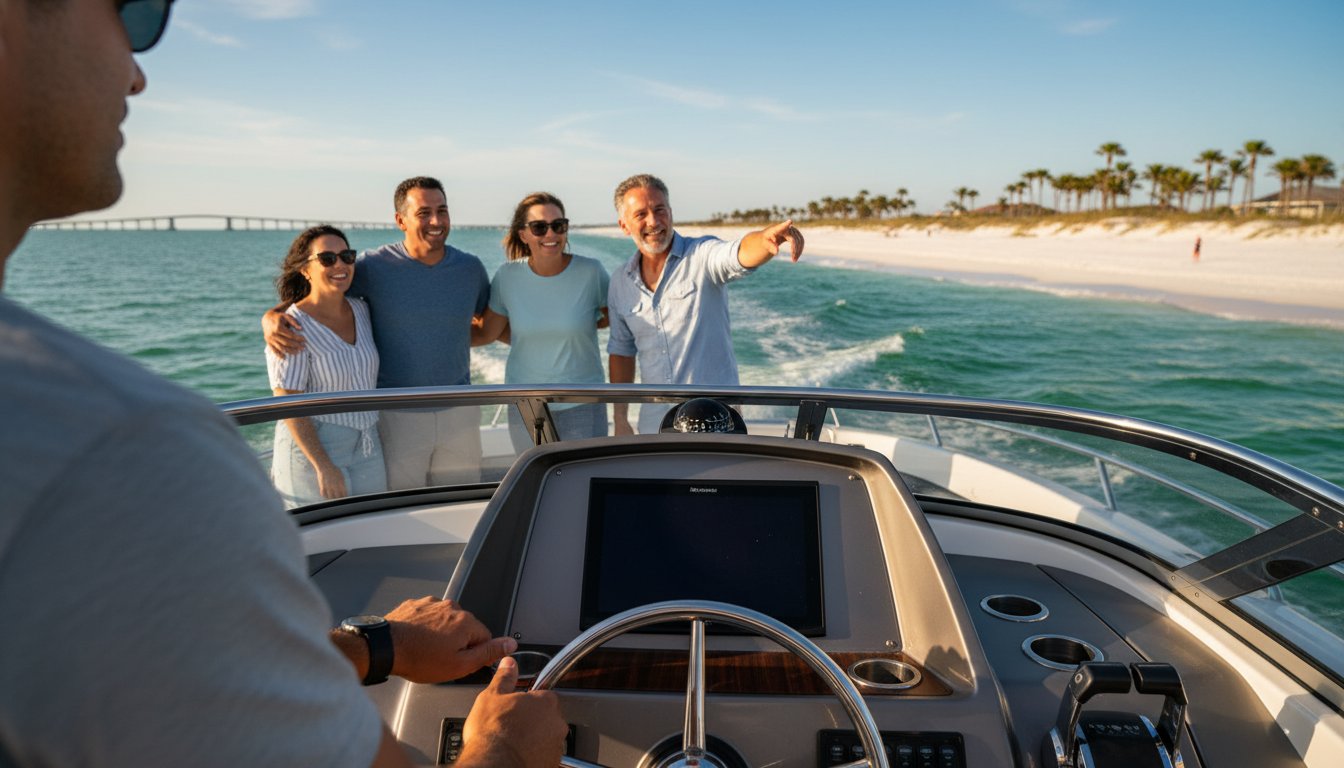
Imagine you’re stepping onto a sun-drenched deck at Orange Beach, ready for a day of exploring Bird Island with your favorite people. You glance toward the helm and wonder what is the steering wheel of a ship called, but you keep the question to yourself to avoid sounding like a total landlubber. You aren’t alone. Data from the Recreational Boating & Fishing Foundation in 2023 showed that roughly 20% of new boaters feel overwhelmed by nautical terminology before they ever leave the dock.
It’s completely normal to feel like an outsider when faced with centuries of maritime jargon. We believe you should be able to live like the locals and enjoy your trip without the hassle of second-guessing your vocabulary. This guide will give you the confidence to identify the ship’s wheel correctly and understand the basic mechanics of how a boat maneuvers through the water. We’ll cover everything you need to know to feel like a seasoned pro on your next professional boat tour.
Key Takeaways
- Discover exactly what is the steering wheel of a ship called and why using the term “helm” will make you sound like a seasoned pro on your next seaside adventure.
- Understand the distinction between the physical wheel and the steering station to better visualize how your Captain navigates the beautiful local waters.
- Learn how a simple turn of the wheel moves the rudder deep underwater, bridging the gap between iconic wooden spokes and modern boating technology.
- Master essential terms like port, starboard, bow, and stern to help you communicate effortlessly while you relax and enjoy the view.
- Get ready to live like the locals by picking up the foundational nautical vocabulary used by professionals to ensure a smooth, hassle-free day on the water.
The Ship’s Wheel vs. The Helm: Understanding the Core Terminology
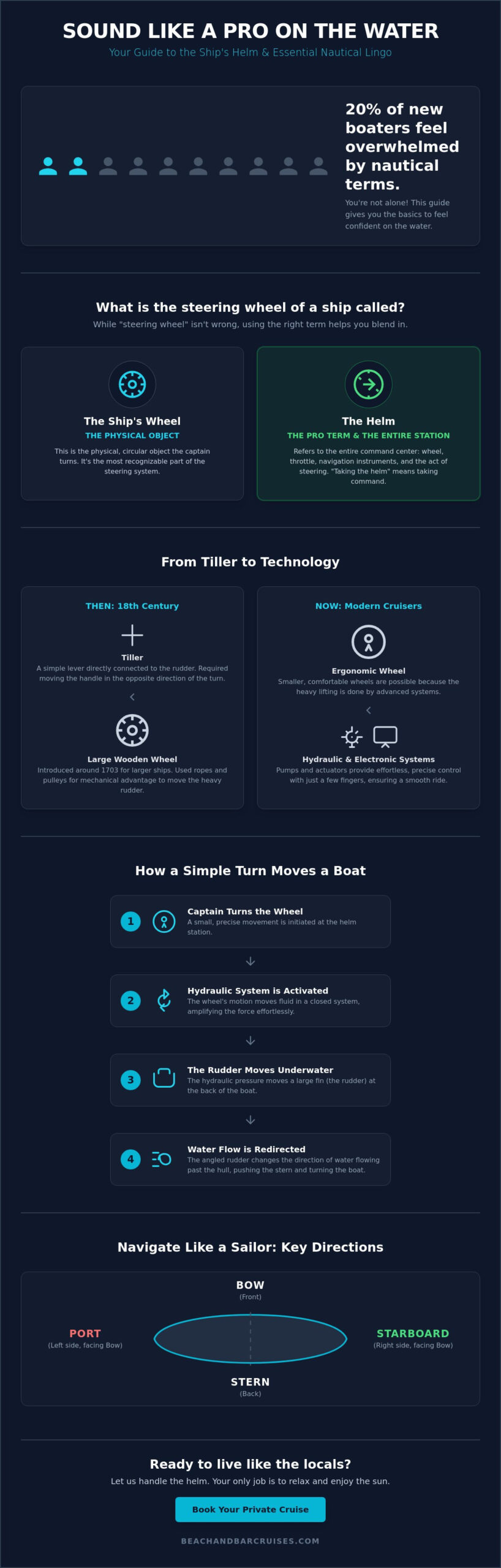
If you’re curious about what is the steering wheel of a ship called, the simplest answer is the ship’s wheel. While “steering wheel” is technically accurate, you’ll rarely hear a USCG licensed Captain use that phrase while out on the water. Instead, mariners prefer the terms “wheel” or “helm” to describe the equipment used to guide a vessel through the waves. Using the right language helps you blend in with the locals and understand the deeper traditions of life at sea.
The Ship’s wheel serves as the physical interface between the captain and the rudder. This design became standard in the early 1700s when larger vessels required more mechanical advantage than a simple lever could provide. Before the invention of the circular wheel, sailors used a “helm,” which was originally a wooden tiller or handle attached directly to the rudder post. Over time, the name for the handle became the name for the entire steering operation. The helm is the place where the ship is steered, encompassing the wheel, throttle, and navigation instruments.
Why is it Often Called the Helm?
The transition from calling the device a wheel to calling the area the helm reflects a shift in how we view boat control. When a captain says they’re “taking the helm,” they aren’t just grabbing a piece of wood or metal; they’re assuming responsibility for the entire vessel’s direction and safety. This linguistic shift creates a sense of authority and command that is central to maritime culture. In modern boating, especially on the luxury cruises we offer near Bird Island, captains refer to the “helm station” as the centralized hub for all electronic and mechanical controls.
- The Wheel: The physical circular object the pilot turns to change course.
- The Helm: The entire steering station and the functional act of controlling the boat.
- The Tiller: The ancestor of the wheel, still found on many smaller sailboats and skiffs today.
At Beach & Bar Cruises, we believe your only job should be to live like the locals and soak up the sun. You can find more tips on maritime life and vacation ideas by visiting our blog section. Our team handles all the technical work at the helm so you can enjoy a stress-free escape without the hassle of operating the boat yourself.
From Tiller to Technology: How a Ship’s Wheel Actually Works
The journey from a simple wooden stick to a high-tech console is a fascinating part of maritime history. When you ask what is the steering wheel of a ship called, you’re really asking about the evolution of control. In the 18th century, massive wooden wheels with iconic spokes were standard. These wheels were often five to six feet in diameter because they relied on physical leverage and rope-and-pulley systems to move a heavy rudder against the force of the sea. Today, modern boats use smaller, ergonomic wheels because hydraulic pumps and electronic actuators do the hard work for us.
The Role of the Rudder and Tiller
Before the wheel was widely adopted around 1703, sailors used a tiller. This was a simple lever attached directly to the rudder, which is the underwater fin that redirects water flow to turn the vessel. Navigating with a tiller requires the captain to move the handle in the opposite direction of the desired turn. Understanding the relationship between the wheel, the tiller, and The Helm is essential for any aspiring boater. Our captains use subtle wheel movements to counter wind and current, keeping your ride smooth and steady while you relax with a cold drink.
Modern Steering on Private Charters
On a modern 21-foot Tidewater-style vessel, the steering experience is all about precision and comfort. These boats utilize hydraulic steering systems that allow for effortless turns with just a few fingers. The wheel is mounted on a binnacle; this is the sturdy stand that also houses the compass and engine controls. This setup ensures the captain has everything needed to provide a safe, enjoyable trip through the beautiful waters of Orange Beach. If you want to see this technology in action without the hassle of operating the boat yourself, you can explore our latest cruise tips to prepare for your next outing. We take care of the technical details so you can focus on living like the locals and enjoying the sunshine.
Essential Nautical Terms for Your Next Private Boat Tour
Learning basic lingo makes you feel like a seasoned sailor before you even step off the dock. When you’re on a cruise, you’ll hear the captain use specific words to keep everyone safe and informed. We use Port (left) and Starboard (right) because these directions stay the same regardless of which way a passenger is looking. This prevents confusion during quick maneuvers or when spotting dolphins. The Bow is the front of the vessel, while the Stern is the back. Understanding the Draft is also vital, as it tells the captain how much water the boat needs to float without the Hull touching the sandy bottom. Learn more boating tips on our blog to prepare for your seaside adventure.
- Port: The left side of the boat when facing forward.
- Starboard: The right side of the boat when facing forward.
- Bow: The very front of the boat.
- Stern: The very back of the boat.
Why Professional Captains Handle the ‘Hassle’ of the Helm
Even if you know what is the steering wheel of a ship called, you shouldn’t have to spend your vacation worrying about it. A USCG licensed Captain manages all the technicalities so you can focus on the fun. They handle the helm, or the wheel, while you live like the locals and soak up the sun. Private charters are the best way to enjoy Orange Beach without the hassle of operating the boat. You get to relax with a cold drink and some munchies while your guide navigates the tides and keeps the vessel in safe waters. This service-oriented approach ensures your trip is a stress-free escape from everyday responsibilities.
Communicating with Your Captain
Your captain is more than a driver; they’re a hospitable local guide. Use your new vocabulary to ask about marine life near the bow or the best views from the stern. Captains love sharing maritime traditions and the history of landmarks like Bird Island. You might even want to brush up on classic nautical greetings — understanding the ahoy meaning and its rich seafaring history is a great way to connect with your captain and show off your growing knowledge of maritime culture. Since they manage the navigation, they have plenty of time to answer questions and ensure your group feels catered to throughout the journey. It’s a high-quality, curated experience where the only thing you need to do is enjoy the beautiful waters and the freedom of the coast.
Step Aboard and Take Command of Your Nautical Knowledge
You’ve mastered the basics of maritime terminology and discovered exactly what is the steering wheel of a ship called. From understanding the difference between the physical wheel and the helm to learning how steering systems evolved from simple tillers, you now have the vocabulary of a seasoned mariner. These essentials help you feel right at home on the water during your next coastal getaway. It’s the first step toward feeling like a true insider when you’re out exploring the coast.
Now it’s time to trade the definitions for a real world experience where you can live like the locals. Our USCG licensed Captain handles all the technical work on our modern 21-foot Tidewater boat, allowing you to relax without the hassle of operating the vessel yourself. We provide private tours for up to six people, ensuring your group enjoys a curated and comfortable journey through beautiful local waters. Book your private sunset cruise today to see the helm in action while you enjoy a stress free escape. We look forward to sharing an unforgettable seaside adventure with you soon.
Frequently Asked Questions
Is it okay to call it a steering wheel on a boat?
You can certainly call it a steering wheel, though boaters typically refer to it as the wheel or the helm. While 90 percent of guests use familiar car terms, knowing what is the steering wheel of a ship called helps you feel like a local on the water. We focus on your comfort, so don’t stress the terminology while you’re sipping a cold drink and enjoying the Gulf breeze.
What is the difference between a helm and a tiller?
A helm represents the entire steering area of the boat, while a tiller is a physical lever used to turn the rudder directly. Most modern powerboats over 20 feet use a wheel, but smaller vessels often rely on tillers for simplicity. You’ll notice the difference immediately because a tiller requires you to push the handle left to go right, which is a fun bit of nautical trivia for your next trip.
Who is the person who stands at the wheel called?
The person steering the vessel is known as the helmsman, though on our trips, you’ll be guided by a USCG licensed Captain. Our crew takes care of everything so you can live like the locals without the hassle of operating the boat yourself. Having a professional at the wheel means you can focus on the 100 percent relaxation you deserve while we navigate the best local watering holes.
Why do ship’s wheels have spokes?
Ship’s wheels feature spokes to give the pilot better leverage and a more secure grip during difficult maneuvers. Before hydraulic steering was invented in the mid-19th century, sailors needed these handles to exert enough force to move heavy rudders against the waves. Most traditional wheels include one distinctively marked spoke, called the king spoke, which lets the person steering know when the rudder is centered at zero degrees.
Article by
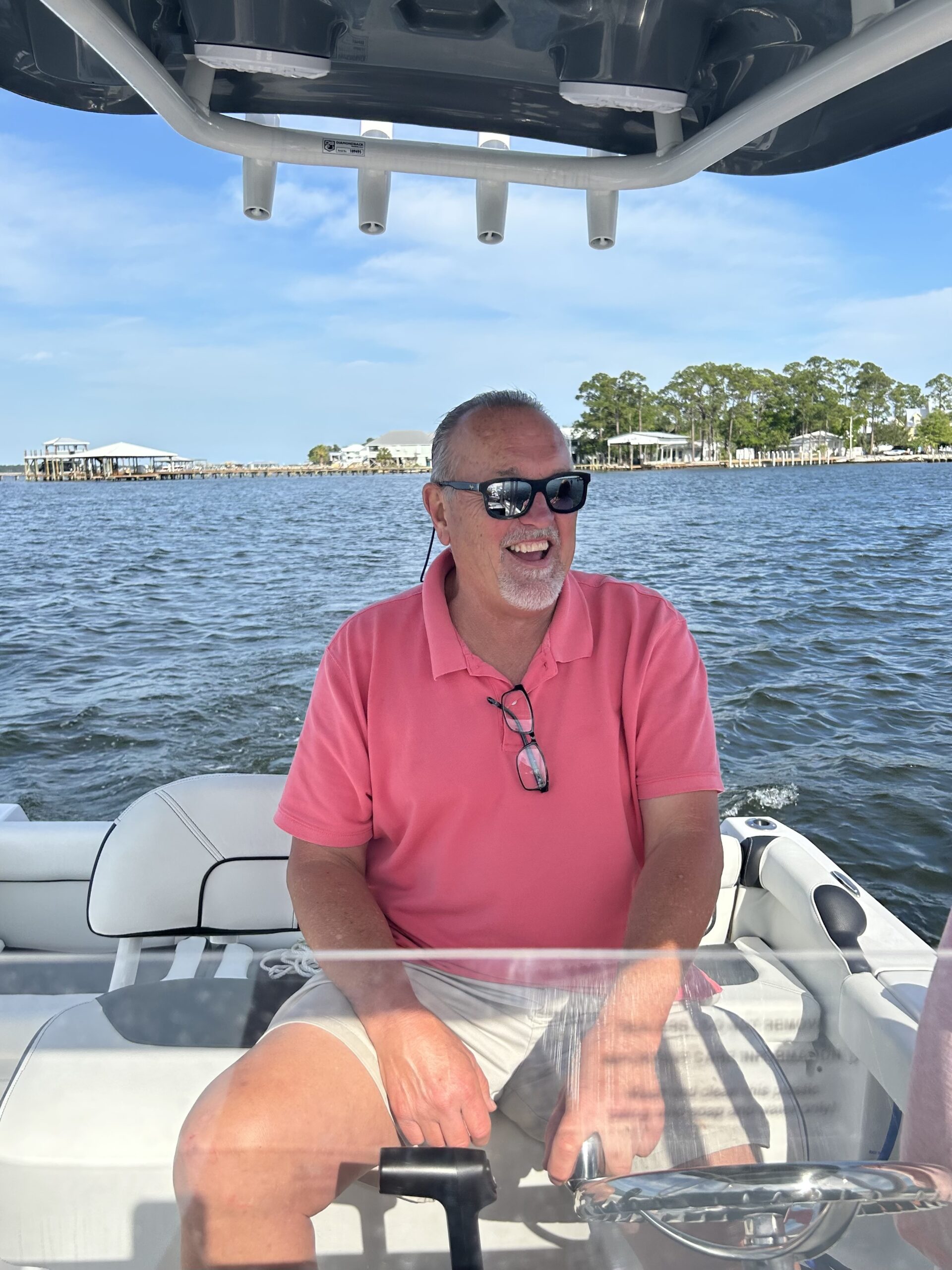
Captain Les
Captain Les has been operating boats for 40 years. The last 10 years have been in the waters around Orange Beach so he is very familiar with the waters and the area.