

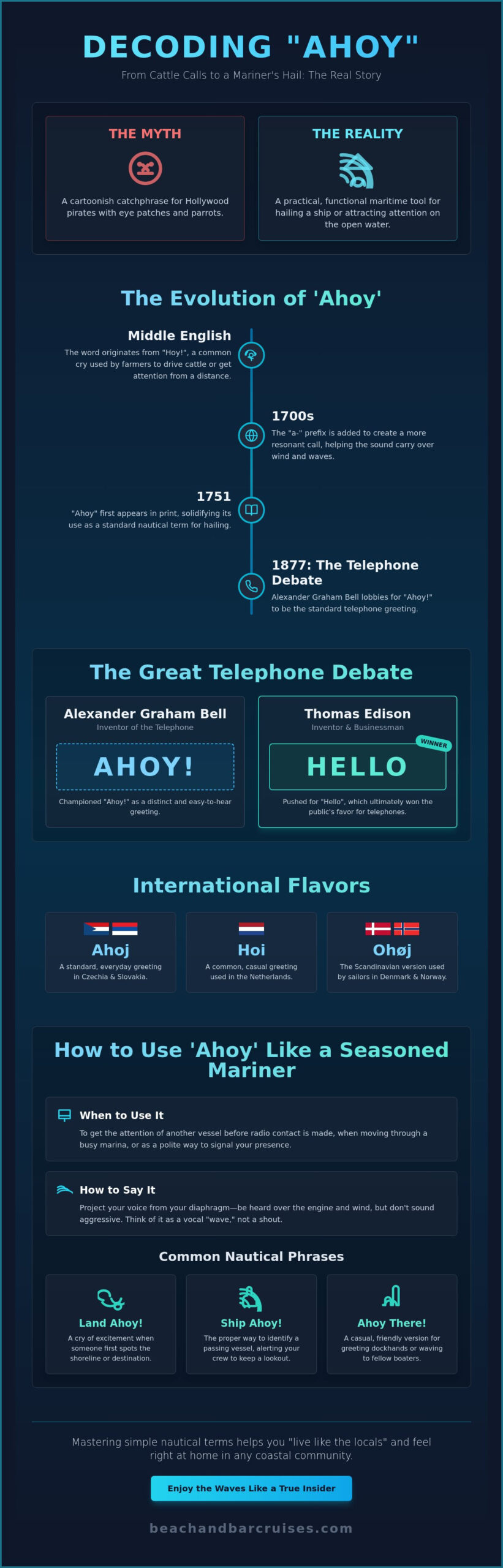
What if the most famous pirate greeting in history wasn’t actually meant for pirates at all? It’s common to feel like a bit of a landlubber when you first step onto a boat. You might worry that using nautical terms will make you sound like a cartoon character rather than a real sailor. Most people feel a bit of hesitation before shouting a greeting across the water because they don’t want to get the terminology wrong. Understanding the true ahoy meaning is your first step toward feeling like a confident local on the water. This term first appeared in print in 1751, and even Alexander Graham Bell famously lobbied for it to be the standard telephone greeting in 1877.
In this guide, you will discover the fascinating history of this greeting and how to use it naturally during your next seaside adventure. We’ll show you how to hail another vessel with the same ease as a USCG licensed Captain. You will learn the proper maritime etiquette to ensure you enjoy the boating lifestyle without any of the hassle or confusion. By the time we’re done, you will be ready to live like the locals and enjoy the waves like a true insider.
Key Takeaways
- Trace the fascinating roots of this greeting back to Middle English cattle cries to understand how it evolved into a maritime staple.
- Explore the functional ahoy meaning in modern boating as a vital tool for hailing vessels when your radio isn’t in reach.
- Learn to distinguish between “pirate speak” and authentic communication so you can interact with other mariners with confidence and ease.
- Discover how mastering simple nautical terms helps you “live like the locals” and feel right at home in any coastal community.
- Gain the knowledge needed to reduce the hassle of your next trip, allowing you to fully relax and enjoy the luxury of life on the water.
The Origins and Evolution of ‘Ahoy’: More Than a Pirate Catchphrase
When you’re out on the water for one of our unforgettable seaside adventures, you’ll likely hear a few calls of “ahoy” drifting across the waves. While many people think of it as a scripted pirate line, the true ahoy meaning is far more practical. It’s a signal word used to hail a ship or attract attention on the open sea. The word’s roots stretch back to the Middle English “Hoy!”, which was a common cry used by farmers to drive cattle or grab someone’s attention from a distance.
By the 1700s, as sailing became a more structured and professional trade, the “a-” prefix was added to create a more resonant, long-distance call. This addition helped the sound carry over the wind and crashing waves, making it a vital tool for communication before the era of modern radios. You can explore more about the linguistic History of Ahoy to see how it transitioned from the farm to the deck of a man-of-war.
To better understand this concept and its historical roots, watch this helpful video:
From the High Seas to the Telephone: The Bell vs. Edison Debate
In the late 1870s, a linguistic battle broke out that had nothing to do with the ocean. Alexander Graham Bell, the inventor of the telephone, was a staunch supporter of using “Ahoy!” as the standard greeting for answering a call. He felt it was distinct and easy to hear. However, Thomas Edison pushed for “Hello” in an 1877 letter to the Central District and Printing Telegraph Company of Pittsburgh. Edison’s choice eventually won the public’s favor, but “ahoy” remains the superior nautical greeting because it preserves the spirit of exploration and the specific etiquette of life on the water. For more tips on living like a local on the water, check out our blog section.
International Flavors: Ahoy Around the Globe
The ahoy meaning has traveled far beyond English-speaking docks. It has deep Germanic roots that connect it to several other languages, showing how sailors influenced global culture. Consider these variations:
- Ahoj: Surprisingly, this is a standard, everyday greeting in landlocked Czechia and Slovakia.
- Hoi: A common, casual greeting used in the Netherlands.
- Ohøj: The Scandinavian version used by sailors in Denmark and Norway.
Whether you’re cruising through Orange Beach or exploring international waters, this greeting serves as a bridge between the past and the present. It’s a reminder that boating is about more than just moving from point A to point B; it’s about joining a community of people who respect the history of the sea.
How to Use ‘Ahoy’ Like a Seasoned Mariner
While Hollywood movies often link the term to eye patches and parrots, the real-world ahoy meaning is much more practical. It’s a functional tool for communication when you’re out on the beautiful waters of Orange Beach. You don’t need to grow a beard or carry a cutlass to use it correctly. In modern boating, we use it to get the attention of another vessel before a radio channel is established or when moving through a busy marina. It serves as a polite way to say, “I see you, and I’m signaling my presence.”
When you hail someone, project your voice from your diaphragm. You want to be heard over the engine and the wind, but you don’t want to sound aggressive. Think of it as a vocal “wave” rather than a shout. If someone hails you first, a simple “Ahoy!” back or a friendly wave is the standard response. If you’re curious about the linguistic roots, the etymology of ahoy shows it evolved from “hoy,” a common greeting used to drive cattle or get attention as far back as the 14th century.
Common Nautical Phrases Using ‘Ahoy’
- Land Ahoy!: You’ll hear this when someone first spots the shoreline or a popular spot like Bird Island after a day on the Gulf. It’s a signal of arrival and excitement.
- Ship Ahoy!: This is the proper way to identify a passing vessel during an inshore cruise. It alerts the crew to keep a lookout and stay safe.
- Ahoy There!: This is the casual, friendly version. It’s perfect for greeting dockhands as you pull up to local watering holes or waving to fellow boaters.
Modern Boating Etiquette: When to Hail and When to Hush
On a private charter, you want to live like the locals without overdoing the pirate theme. Your Captain handles the technical work and communication with other boats, so you can focus on your drinks and the scenery. Mastering the greeting is just the start of your journey, much like learning what the steering wheel of a ship is called. If you want to experience the water without the hassle of operating the boat, come join us for a sunset trip. You can explore our blog to see how we make every trip an easy, unforgettable seaside escape.
Mastering the Language of Leisure: Why Nautical Terms Matter
Stepping onto a boat involves more than just finding a comfortable seat; it’s about joining a storied coastal community. Using the right terminology helps you “live like the locals” and transforms a standard trip into an authentic maritime experience. When you grasp the ahoy meaning, you connect with centuries of seafaring history. You can explore the real story of ahoy to discover how this greeting transitioned from a functional signal to a symbol of leisure. This small bit of knowledge builds confidence and makes every interaction on the docks feel natural and relaxed.
The ‘Hassle-Free’ Way to Enjoy the Water
You don’t need to be a master mariner to enjoy a private excursion. While our USCG licensed Captain handles the technical operation of our modern 21-foot Tidewater boat, you’re free to soak up the culture. This setup removes the stress of navigation and safety protocols, letting you focus entirely on the fun. Most guests find that after just 90 minutes on the water, they feel like true insiders. We provide a low-pressure environment where you can learn the ropes at your own pace. For more insights on making the most of your time on the Gulf, explore our boating lifestyle blog for expert tips and local secrets.
Ready to Hear ‘Ahoy’ for Real?
There’s no better place to put your new vocabulary to use than on the deck of a private charter. Whether we’re heading toward the pristine sands of Bird Island or visiting popular Orange Beach watering holes, the atmosphere is always welcoming. We invite you to experience the nautical lifestyle firsthand without the responsibilities of boat ownership. Book a sunset cruise or an island hopping adventure today; we’ll handle the logistics while you master the art of the coastal greeting. Your unforgettable seaside adventure is just one call away.
Ready to Hail Your Next Adventure?
Mastering the ahoy meaning is just the first step toward feeling at home on the Gulf Coast. This 14th-century call evolved from a simple shout into a symbol of maritime heritage that connects every boater to the legends of the sea. When you understand these traditions, you stop being a visitor and start living like a local. You’ve learned how to signal other vessels and why these terms matter; now it’s time to put that knowledge to work on the sparkling waters of Orange Beach.
Skip the stress of navigating and let us handle the helm. Our USCG Licensed Captain will guide you aboard a private 21-foot modern Tidewater boat designed for comfort and style. We specialize in personalized itineraries for up to six guests, ensuring your group enjoys the perfect blend of hidden watering holes and scenic bird-watching spots. You deserve a day where the only thing on your to-do list is relaxing with a cold drink in hand. Book your private seaside adventure and live like a local today!
The salt air is calling, and we can’t wait to welcome you aboard for an unforgettable day on the water.
Frequently Asked Questions
Is ‘ahoy’ still used in real-life boating today?
Yes, boaters still use the term today, though it often appears in more traditional or formal hailing situations rather than casual dockside chats. When you are out on the beautiful waters of Orange Beach, you might hear a USCG licensed Captain use it to get another vessel’s attention. It remains a functional tool for signaling across 50 to 100 yards of open water where wind noise makes standard greetings difficult to hear.
What is the difference between ‘ahoy’ and ‘hello’?
The primary difference lies in the intent; ‘ahoy’ is specifically designed to get attention from a distance, while ‘hello’ is a general greeting. Historically, the ahoy meaning stems from the Middle English word “hoi,” which was a call to drive cattle. Alexander Graham Bell proposed using “ahoy” as the standard telephone greeting in 1877 before Thomas Edison pushed for “hello.” On a boat, it serves as a functional signal rather than just a social opening.
Why do pirates always say ‘ahoy’ in movies?
Filmmakers use this greeting to create an instant nautical atmosphere, a trend that gained massive popularity after Robert Louis Stevenson published Treasure Island in 1883. This specific vocabulary choice helps viewers quickly identify characters as sailors. While real 18th-century pirates used the term, Hollywood intensified its use in 100 percent of pirate-themed media to ensure the audience feels that sense of seaside adventure. It makes the experience feel authentic to the period.
Is it ‘ahoy’ or ‘ay-hoy’—how do you pronounce it correctly?
The correct pronunciation is “uh-HOY,” with the emphasis placed firmly on the second syllable. You should avoid saying “ay-hoy” because the first vowel is a neutral schwa sound. When you join us for a cruise, you’ll notice the rhythm matches the natural sway of the boat. It’s a two-syllable call that carries well over the sound of waves, making it a reliable way to hail another captain without the hassle of electronic signaling.
Article by
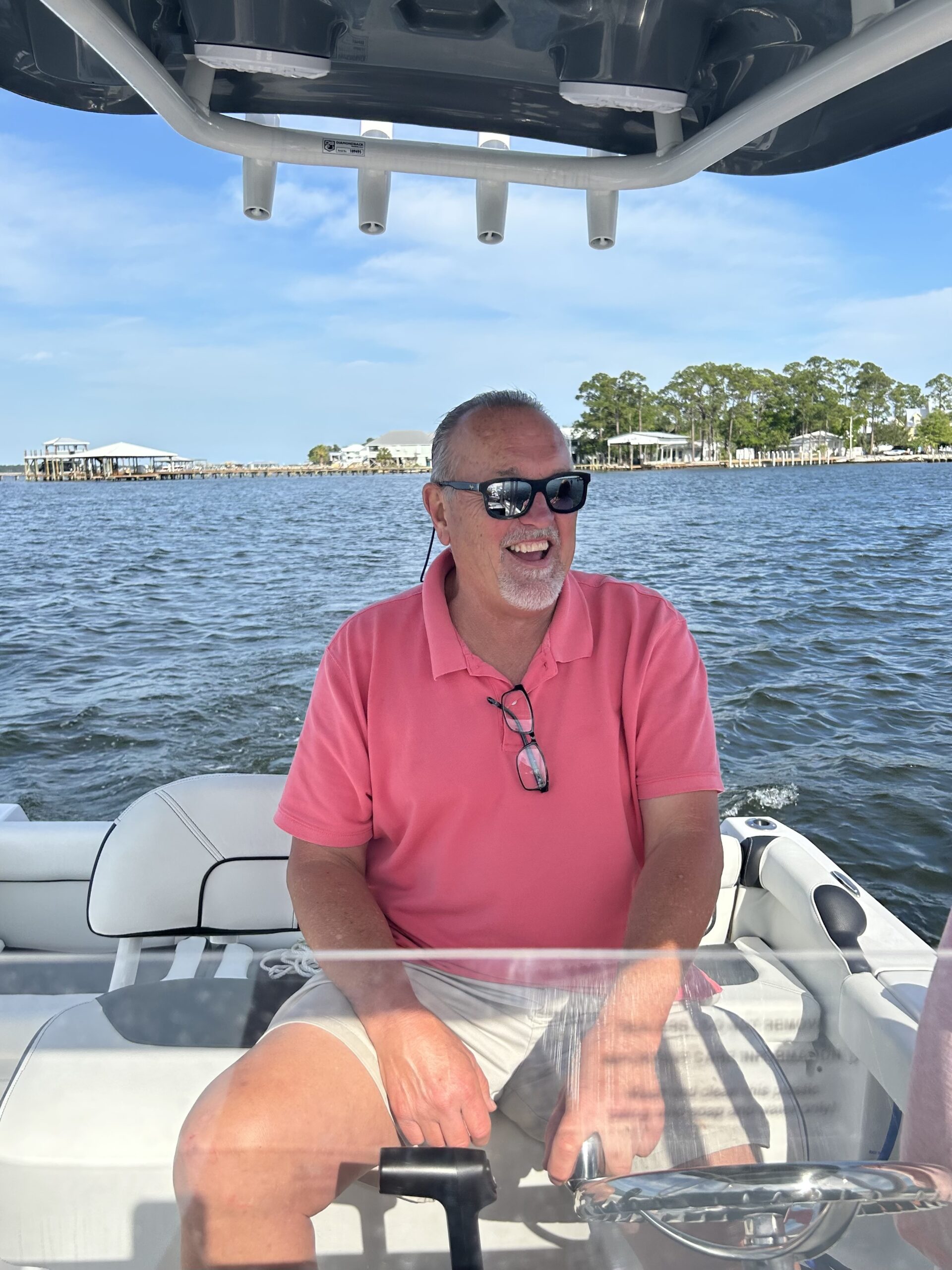
Captain Les
Captain Les has been operating boats for 40 years. The last 10 years have been in the waters around Orange Beach so he is very familiar with the waters and the area.