
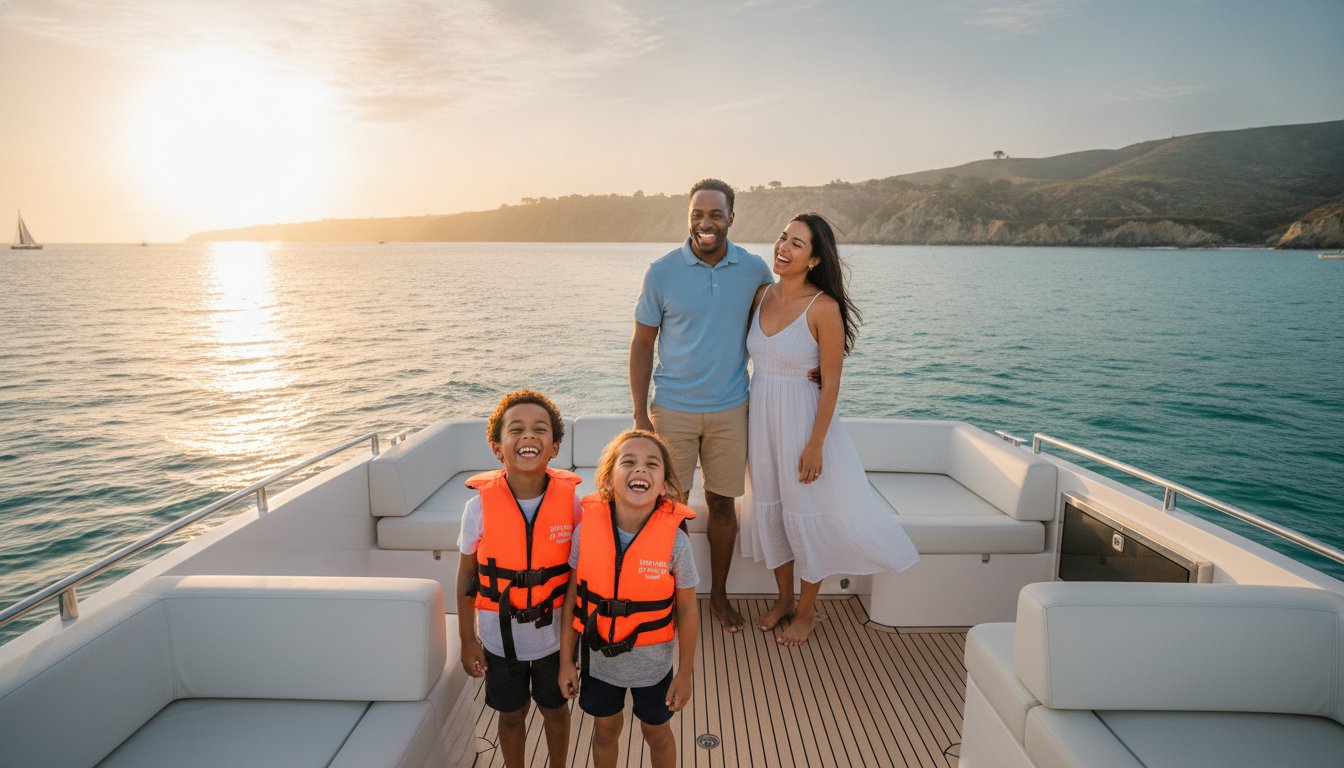
Did you know that in 87% of fatal boating accidents where life jacket use was known, the victims weren’t wearing a PFD? That statistic from the 2024 U.S. Coast Guard report can feel heavy, especially when you’re just looking for a relaxing day on the water. It’s natural to worry about your little ones falling overboard or getting sunstroke while you’re miles from the dock. You want to focus on the sparkling waves and the joy of a family cruise, but the “what ifs” can sometimes cast a shadow over the excitement.
You can absolutely have that stress-free vacation memory you’ve been dreaming of. This guide provides everything you need to know about boat tour safety for families with kids, ensuring your time on the water is both secure and spectacular. We’ll cover the latest 2026 life jacket laws that now align state and federal rules, how to choose a captain with the right credentials, and a simple checklist to keep everyone comfortable. From preventing seasickness to verifying a vessel’s safety certificate, we’ll handle the technical details so you can focus on the salt air and sunshine.
Key Takeaways
- Learn the latest 2026 life jacket requirements and why USCG-approved gear is the cornerstone of boat tour safety for families with kids.
- Discover the “one hand for the boat” rule and other simple onboard habits that keep little explorers steady and secure while we’re underway.
- Find out why choosing the right seat on the vessel can prevent seasickness and provide a smoother, more relaxing ride for the whole family.
- Understand how a private charter provides a controlled environment where a professional captain prioritizes your family’s specific comfort and safety.
- Get tips on essential gear like UPF clothing and hydration strategies to protect your children from the intense sun reflection on the water.
Essential Safety Gear and Pre-Trip Preparation for Families
Setting the stage for a perfect day on the water starts long before you step onto the dock. When you’re planning for boat tour safety for families with kids, think of preparation as the foundation of your relaxation. By handling the logistics now, you ensure that once the engine starts, your only job is to enjoy the coastal breeze and the sparkling horizon. Beyond the basics, understanding Boating safety basics helps you feel like a seasoned pro before you even leave the shore.
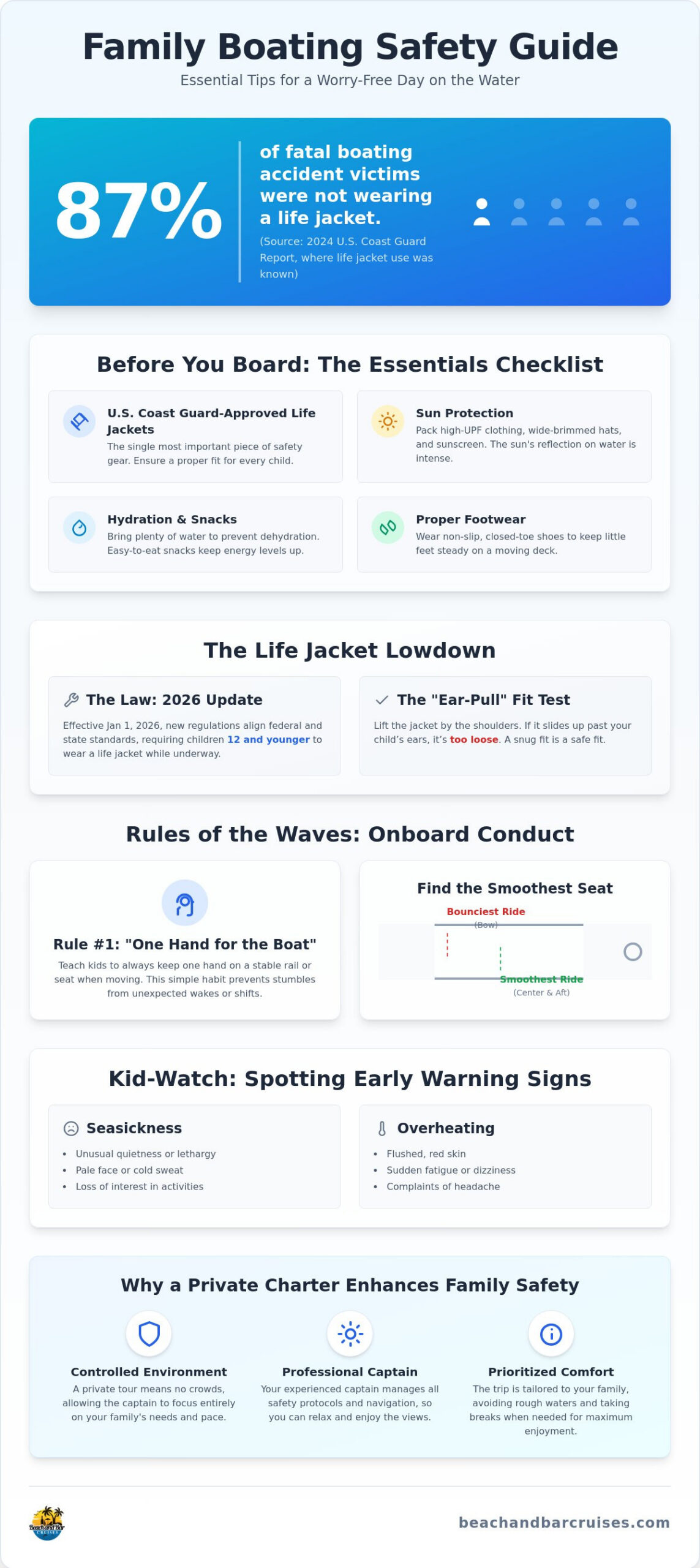
Safety gear is your first priority. Effective January 1, 2026, new regulations in Maine require children 12 years of age and younger to wear a U.S. Coast Guard-approved life jacket while underway, aligning with federal standards for children under 13. It’s about more than just compliance; it’s about peace of mind. Along with PFDs, pack high-quality UPF clothing and wide-brimmed hats to combat the sun’s reflection off the water. Don’t forget non-slip, closed-toe shoes to keep little feet steady on a moving deck, and bring plenty of water to keep everyone hydrated and happy during your excursion.
To better understand how to prepare your little ones for their maritime adventure, watch this helpful video:
Choosing the Right Life Jacket for Every Age
Not all life jackets are created equal. Type I PFDs are designed for rougher waters, while Type II and III are often more comfortable for near-shore sightseeing. Ensure the jacket fits by performing the “ear-pull” test. Lift the jacket by the shoulders; if it slides up past your child’s ears, it’s too loose. A snug fit ensures they stay afloat correctly if they ever end up in the water, allowing you to breathe easier while they explore the boat.
The “Junior Captain” Safety Briefing
Turn safety into a game by hosting a “Junior Captain” meeting before boarding. Give your kids specific roles, like dolphin spotters or buoy watchers. This builds excitement while establishing that the captain’s word is final. Introduce them to maritime traditions by teaching them about the meaning of “Ahoy” as a friendly way to greet other boaters. At Beach & Bar Cruises, we find that involving children in the process makes boat tour safety for families with kids feel like a natural, adventurous part of the day.
Safe Conduct and Rules While Underway
Once the lines are tossed and the boat pulls away from the dock, the real fun begins. Maintaining boat tour safety for families with kids during the journey is mostly about establishing a few simple, easy-to-follow habits. Think of these as the “rules of the road” but for the water. The most important habit to teach is the “one hand for the boat” rule. This means every time a child moves, they should have one hand firmly on a rail or seat. It prevents stumbles when the boat meets a wake or a sudden shift in the breeze. It’s a simple trick that makes every little explorer feel like a steady member of the crew.
Where you sit matters just as much as how you move. While the bow might look exciting, it’s often the bounciest part of the ride. For little ones or anyone prone to a bit of tummy-flutter, the center or the aft provides the smoothest experience. The National Safety Council emphasizes that staying seated while the boat is in motion is a primary way to prevent accidental falls. When you’re enjoying a private sightseeing cruise with Beach & Bar Cruises, your captain will ensure everyone is settled in the safest spot before throttling up, allowing you to focus on the dolphins rather than the deck physics.
Managing Movement on a Moving Vessel
Boarding and disembarking are the times when slips are most likely to happen. Always wait for the captain’s signal before stepping across the gap between the dock and the boat. To keep the kids engaged, you can teach them that the steering wheel isn’t just a wheel. It’s officially called the helm. You can find more fun facts and maritime terms in our boating blogs to keep them curious and involved throughout the trip. Remember, the captain is the ultimate authority on the vessel, and their instructions are there to keep the memories happy and the journey smooth.
Recognizing Early Signs of Overheating or Seasickness
Kids don’t always have the words to say they feel unwell. Watch for signs like unusual quietness, a pale face, or sudden sweating. If you notice these symptoms, move them to a shaded area immediately and have them focus on the distant horizon rather than the moving water nearby. Small sips of cool water and a light snack can work wonders for heat-related fussiness. By staying proactive, you ensure that boat tour safety for families with kids stays top of mind without ever interrupting the vacation vibe.
Why Private Charters Offer the Safest Family Experience
Choosing the right vessel is just as important as packing the right gear. While public tours often feel rushed or crowded, a private charter provides a controlled environment where your family’s comfort is the only priority. On a private boat, you don’t have to worry about unpredictable strangers or overstuffed decks. Instead, you enjoy a high-touch, guest-first experience where the captain can keep a watchful eye on every little explorer. This personalized attention is a cornerstone of boat tour safety for families with kids, allowing parents to actually relax and soak in the coastal scenery.
Private vessels also boast higher standards for maintenance and sanitation. Because these boats host fewer guests, the equipment stays in pristine condition and the deck remains clear of the clutter often found on larger commercial crafts. You also gain the luxury of a flexible pace. If the kids get restless or the sun feels a bit too warm, your captain can easily adjust the itinerary, head for a quiet cove, or return to the dock early. This level of control ensures that your maritime adventure remains a joyful memory rather than a logistical struggle.
The Value of a USCG Licensed Captain
Safety starts at the helm. A USCG-licensed captain has completed rigorous testing, safety training, and regular drug screenings to earn their credentials. They understand the nuances of local currents and weather patterns, taking on all the technical work of navigation. When you book a private excursion, you aren’t just renting a boat; you’re hiring a professional guardian who handles the “what ifs” so you can focus on the “ahoys.”
Designing a Safe and Fun Itinerary
Tailoring the trip to your children’s needs is the best way to ensure boat tour safety for families with kids. Shorter trips, such as a Dolphin & Sightseeing Cruise or a Sunset Cruise, are perfect for younger children with shorter attention spans. If your family loves the water, a private Island Excursion offers a supervised, secluded environment for swimming away from the chaotic crowds of public beaches. These curated experiences allow you to explore the beauty of the coast from an insider’s perspective while keeping your little ones secure and happy.
Set Sail for Your Next Family Adventure
Creating a safe and memorable day on the water doesn’t have to be a stressful task. By moving from pre-trip preparation to understanding the physics of a moving vessel, you’ve equipped your family with the knowledge needed for a successful outing. Remember that boat tour safety for families with kids is built on a foundation of professional expertise and a controlled environment. When you prioritize a private experience, you trade the chaos of crowded public boats for a peaceful, curated journey tailored specifically to your little ones’ needs.
At Beach & Bar Cruises, we take the operational burden off your shoulders so you can simply enjoy the ride. Our modern 21-foot Tidewater boat features top-tier safety gear and is led by an experienced USCG licensed Captain. We specialize in private tours for up to 6 people, ensuring a high-touch service where your family’s relaxation is our only goal. Book your stress-free private family cruise today and let us guide you to the best local spots from an insider’s perspective. The water is sparkling, the breeze is warm, and your perfect family memory is waiting just beyond the dock.
Frequently Asked Questions
At what age can a baby safely go on a boat tour?
It’s best to wait until your baby weighs at least 18 pounds before heading out on the water. This weight ensures they fit securely into a U.S. Coast Guard-approved Type II infant life jacket. Most babies reach this size between 4 and 11 months old. Always verify that the life jacket includes a sturdy head support and a crotch strap to keep the infant in a safe, face-up position.
Do kids have to wear life jackets the entire time they are on the boat?
Federal law requires children under 13 to wear a life jacket whenever a recreational vessel is in motion. This is a fundamental part of boat tour safety for families with kids, ensuring protection if the boat meets a sudden wake. While they can often remove the gear if they are in an enclosed cabin, keeping it on while on deck is the smartest choice. It builds good habits and keeps everyone ready for adventure.
What happens if my child gets scared or seasick during the cruise?
Tell your captain right away if your child feels nervous or looks a bit pale. Because we specialize in private charters, we can immediately shift our pace or find a sheltered cove with calmer waters. We can even cut the trip short and head back to the dock if that’s what’s best for your family. This flexibility is a huge benefit, ensuring that your time on the water remains a positive experience for everyone.
Are private boat tours safer than public ones for large families?
Private charters provide a much higher level of safety and oversight than crowded public tours. With a small group of just six people, your captain’s only job is to look after your family. You won’t have to worry about the distractions of a large crowd or the unpredictable actions of other passengers. This intimate setting allows us to maintain a sanitized, modern vessel where every safety detail is meticulously managed for your peace of mind.
Article by
Captain Les
Captain Les has been operating boats for 40 years. The last 10 years have been in the waters around Orange Beach so he is very familiar with the waters and the area.