
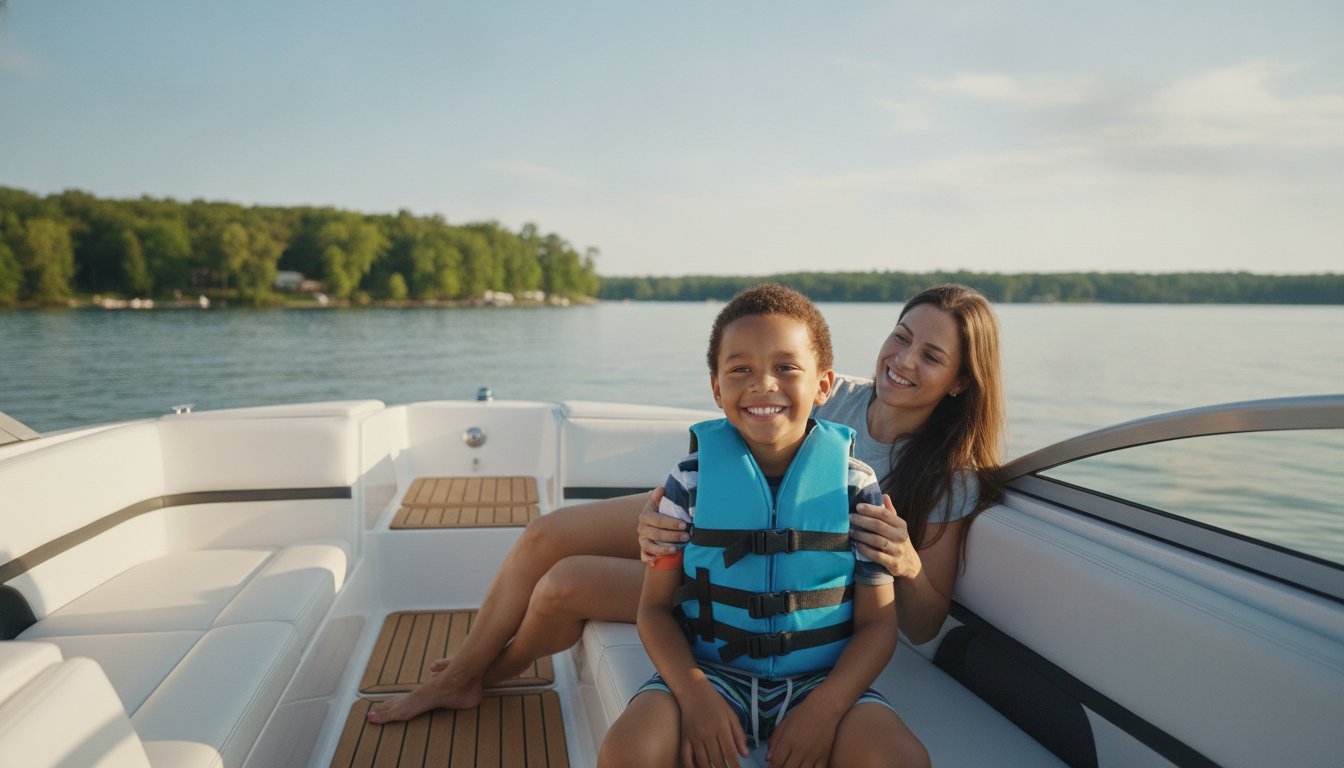
Imagine the sun is finally out, the cooler is packed with your favorite local snacks, and the water is calling your name, only for the day to stall because you aren’t sure if your seven-year-old’s vest meets the latest legal standards. It’s frustrating when you just want to relax, but the maze of life jacket rules for kids on boats often feels like more work than the actual trip. You want your family to be safe, but you shouldn’t have to spend your afternoon squinting at confusing labels or worrying about a surprise inspection while you are trying to enjoy the coast.
This guide simplifies everything you need to know about keeping your little ones compliant and comfortable so you can focus on the scenery. You’ll learn exactly how the “under 13” federal mandate interacts with specific state laws, such as the new 2026 requirements in Maine. We also explain the 2025 shift to icon-based labeling and how to choose a vest based on weight rather than chest size. By the end, you will have the confidence to step onto the dock knowing your safety logistics are handled, leaving nothing left to do but enjoy the breeze and the rhythmic pace of the water.
Key Takeaways
- Master the federal “under 13” mandate and learn how to interpret state-specific regulations to ensure your family is always in compliance.
- Navigate the essential life jacket rules for kids on boats by understanding why vests must remain on even when the vessel is idling or “underway.”
- Learn how to select the perfect fit using weight-based categories and the simple “shoulder lift” test to keep your child secure and comfortable.
- Discover how booking a private charter with a licensed Captain removes the burden of safety logistics so you can focus entirely on the coastal views.
- Gain the confidence to plan a relaxing day on the water where professional safety standards meet a high-touch, guest-first experience.
Federal and State Life Jacket Laws for Children
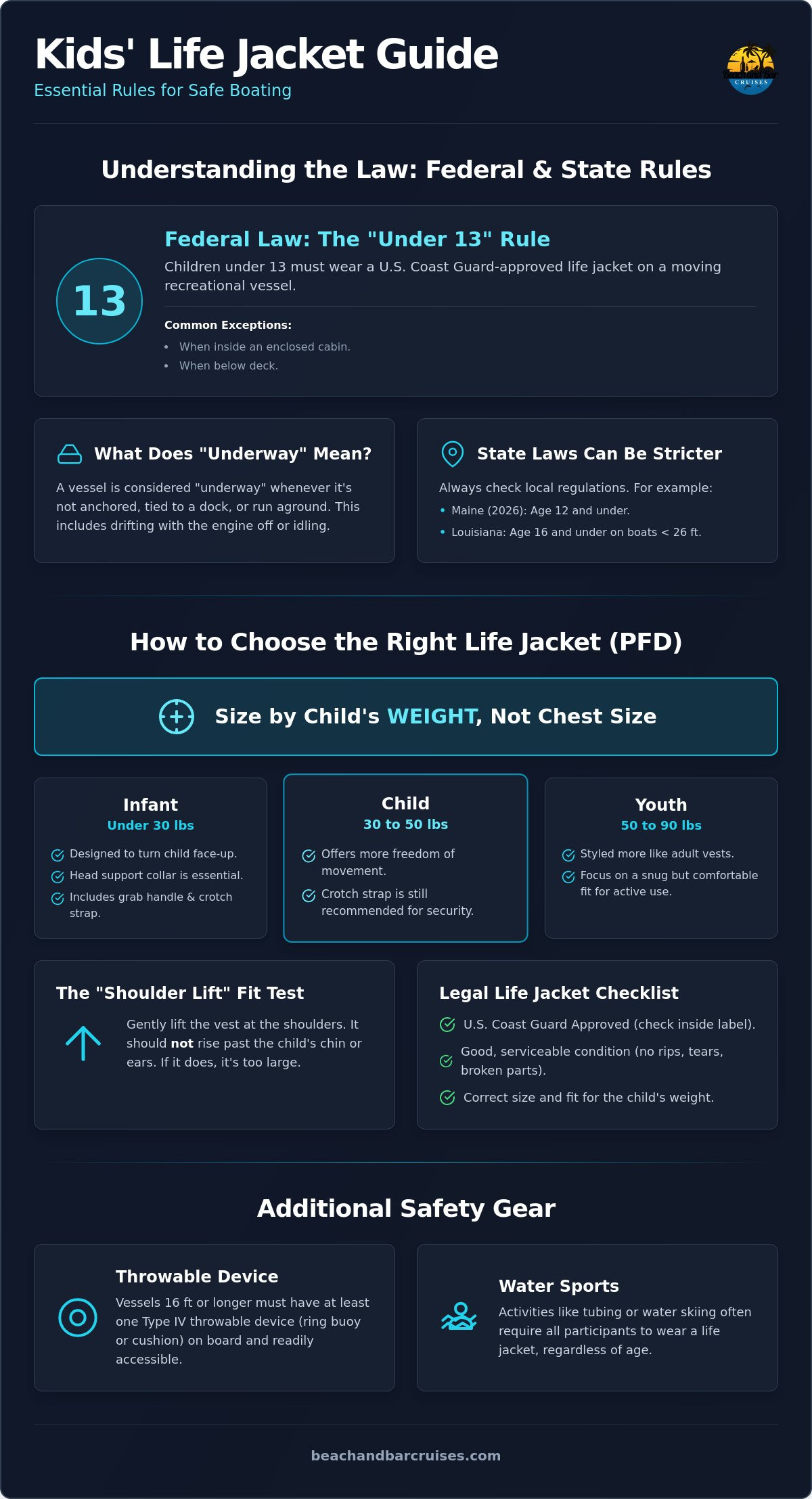
Planning your day on the water should be about making memories, not deciphering legal jargon. Understanding the life jacket rules for kids on boats starts with the federal baseline set by the U.S. Coast Guard. Generally, children under 13 years of age must wear a properly fitted, approved life jacket whenever they are on a moving recreational vessel. This rule applies across all waters subject to federal jurisdiction, ensuring a safety standard for your little explorers. The only common exceptions are when the child is tucked away inside an enclosed cabin or below deck, where the boat’s structure provides a different layer of protection.
Crucially, you must understand the term “underway.” In the eyes of maritime law, a boat is underway whenever it is not anchored, tied to a dock, or aground. This means that even if you are simply drifting or the engine is idling while you enjoy a snack, the life jacket requirement remains in effect. Keeping the vest on during these moments ensures everyone stays safe during unexpected wakes or sudden shifts in the current. To see how authorities are updating safety standards to protect young passengers, watch this brief report:
While federal rules provide a foundation, state laws often take precedence and can be more specific. For instance, a new law in Maine effective January 1, 2026, requires children 12 and under to wear a vest. In Louisiana, the law applies to children 16 and younger on vessels less than 26 feet. Because these regulations vary by destination, it’s wise to check local requirements before you set sail. You can find more helpful guides on maritime safety and local excursions on our boating blog.
What Counts as a Legal Life Jacket?
A legal life jacket must be U.S. Coast Guard-approved, which you can verify by checking for the official stamp on the inside of the vest. This equipment, often called a Personal Flotation Device (PFD), must also be in “serviceable condition.” This means there are no rips, faded fabric, or broken buckles that could compromise the device. A worn-out vest isn’t just uncomfortable; it might fail when it’s needed most, so always inspect your gear before boarding.
Throwable Devices and Extra Requirements
If your vessel is 16 feet or longer, federal law requires you to carry at least one Type IV throwable device, like a ring buoy or cushion, in addition to wearable vests. This device must be immediately available for use if someone goes overboard. High-energy activities like tubing or water skiing often come with their own rules, frequently requiring participants to wear a life jacket regardless of age. Staying informed on these details allows you to enjoy a stress-free day of effortless exploration while we handle the navigation.
Choosing the Right PFD: Size, Fit, and Comfort
Selecting the perfect life jacket is about more than just checking a box for compliance; it’s about ensuring your child can enjoy the rhythmic pace of the water without distraction. Unlike adult gear, sizing for children is determined entirely by weight rather than chest size. You will typically find three categories: Infant (under 30 lbs), Child (30 to 50 lbs), and Youth (50 to 90 lbs). Selecting the correct weight bracket is a key part of following the life jacket rules for kids on boats, as a vest that is too large can ride up and become a safety hazard rather than a help.
Look for specific safety features that provide extra security for smaller passengers. A sturdy crotch strap is essential for infants and younger children because it prevents the vest from slipping over their heads in the water. Vests with a head-support collar are also highly recommended, as they help keep a child’s head above water and often include a grab handle for quick assistance. Because requirements can change depending on where you are sailing, consult these State-specific life jacket laws before you pack your cooler. You can also find more tips on preparing for your family excursion on our boating blog.
Infant vs. Youth Vests
Infant vests are engineered with a specific purpose: to automatically turn a child face-up in the water. This design prioritizes flotation over movement. As your child grows into the “youth” category, vests become more flexible to allow for swimming and playing. While buoyancy remains the priority, these vests offer the mobility needed for a fun Dolphin & Sightseeing Cruise where kids want to move around the deck to spot local wildlife from every angle.
Testing the Fit Before You Depart
Once the vest is buckled, perform the “shoulder lift” test by pulling up on the vest’s shoulders; if it moves past the child’s ears or chin, it is too loose. You should only be able to fit two fingers snugly between the child’s shoulder and the vest straps after they are tightened. If your child is nervous about the new gear, let them wear the vest in a swimming pool first to build confidence and reduce any “water panic” before your actual boat day. Choosing breathable, high-quality materials will also prevent overheating, ensuring the only thing they feel is the cool coastal breeze.
The Advantage of a Private Charter with a Licensed Captain
Stepping onto a boat should feel like the start of a stress-free escape, not a test of your legal knowledge. While understanding the life jacket rules for kids on boats is vital for every parent, hiring a professional allows you to hand off the technical burdens to an expert. A USCG-licensed Captain takes full responsibility for the vessel’s compliance, ensuring that every piece of safety gear is current and correctly sized before you even leave the dock. This allows you to trade the worry of fines or safety mishaps for the simple joy of watching dolphins play in the wake.
Private charters offer a level of personalized attention that crowded public tours simply cannot match. On a private excursion, your Captain provides a calm, engaging pre-departure briefing tailored specifically for your children. Instead of a scary list of “don’ts,” these professionals explain safety in a way that makes kids feel like part of the crew. Because you aren’t competing with dozens of other passengers, the Captain can monitor the deck closely, giving you the freedom to relax with a cold drink while the children explore safely. If you are curious about how specific regions handle these requirements, you can review the state life jacket laws for more context.
Safety Equipment on a Modern Vessel
Experience the water on a modern 21-foot Tidewater boat, designed with both comfort and safety in mind. Unlike some rentals or older public vessels, our private charters feature high-quality, well-maintained PFDs that are soft, breathable, and easy for kids to wear all day. We prioritize your family’s comfort by providing gear that doesn’t chafe or overheat, allowing for a seamless transition from a morning island excursion to a late-afternoon sunset cruise. You can find more details on our commitment to guest-first service on our boating blog.
Booking Your Stress-Free Family Adventure
Planning your trip is easy and transparent. When you book, we encourage you to share the ages and approximate weights of your children so we can have the perfect gear setup waiting for you. Navigating the specific life jacket rules for kids on boats becomes our job, not yours. This proactive approach removes the operational burden from your shoulders, ensuring your boat day is defined by relaxation and authentic local experiences. Start planning your private family cruise today and let us handle the logistics while you enjoy the coastal scenery.
Set Sail for Your Next Family Adventure
Safety is the foundation of every great memory made on the water. By understanding the life jacket rules for kids on boats and prioritizing a proper, weight-based fit, you’ve already done the hard work of preparing for a successful outing. You now know that the right vest doesn’t just meet legal requirements; it provides the comfort your child needs to enjoy the vibrant scenery and the rhythmic pace of the waves without a second thought. Whether you’re spotting local wildlife or simply soaking in the coastal sun, being informed allows you to truly let go of the day’s responsibilities.
If you’re ready to trade the stress of logistics for a curated, high-touch experience, we invite you to join us on deck. Our private excursions are limited to your personal group of six, ensuring a quiet and safe environment for your family. On our modern 21-foot Tidewater boat, Captain Mike handles every technical detail and provides top-tier safety gear that’s ready to go the moment you arrive. As a USCG licensed Captain, he takes on the operational burdens so you can focus on the joy of exploration. Book a private, family-friendly cruise with Captain Mike and discover the best parts of our home from the comfort of your own private charter. We look forward to welcoming you aboard for a day of effortless exploration.
Frequently Asked Questions
Does my child have to wear a life jacket if the boat is anchored?
No, federal law generally only requires children to wear life jackets while the vessel is underway. This means that as soon as we drop the anchor for a quiet afternoon of swimming or island exploration, the legal mandate for wearing the vest is lifted. It’s a perfect time for kids to relax and move more freely, though we always keep the gear close by for when it’s time to pull up the anchor and head to our next destination.
What is the age limit for life jackets on boats in most states?
The federal age limit for life jacket rules for kids on boats is under 13, but state-specific laws often override this standard. While some regions follow the federal baseline, others require children up to age 16 to stay buckled in while the boat is moving. We stay updated on these regional nuances so you don’t have to worry about compliance. Our goal is to provide a seamless transition from the dock to the open water.
Can I use a ‘puddle jumper’ or water wings instead of a life jacket?
You should only use a puddle jumper if it is clearly labeled with a U.S. Coast Guard approval stamp, as many inflatable toys like water wings do not meet legal safety standards. While some hybrid flotation aids are approved for certain activities, they often lack the specialized head support found in professional maritime vests. We provide high-quality, well-maintained life jackets that ensure your little ones are safe while they enjoy the breeze and the scenery.
How do I know if a life jacket is U.S. Coast Guard approved?
Check the inside panel of the vest for a permanent label that includes the U.S. Coast Guard approval number and the intended weight range. This stamp is your guarantee that the gear meets professional safety certifications for recreational boating. If you are using newer equipment, look for the 2025 performance level icons. These symbols make it easy to verify that the vest is suitable for the specific coastal environment we’ll be exploring together.
Article by
Captain Les
Captain Les has been operating boats for 40 years. The last 10 years have been in the waters around Orange Beach so he is very familiar with the waters and the area.